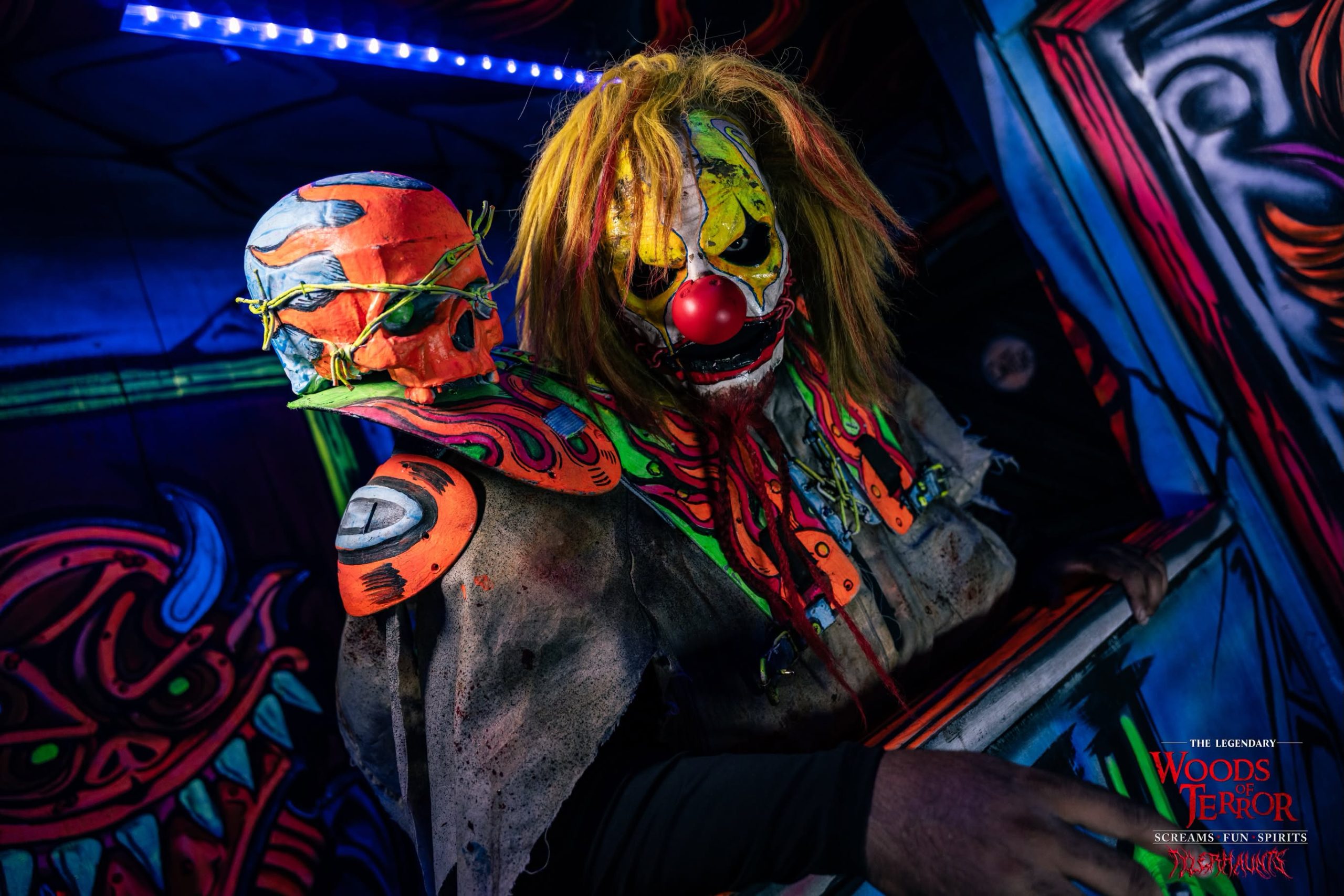
When most people think about a haunted attraction, they think about what happens once they walk through the entrance. They think about the monsters, the sets, the screams, the costumes, the lights, and the moments that make them jump. What they don’t always think about is everything that has to happen before the first guest ever steps into the woods.
A major haunted attraction isn’t simply a collection of scary rooms. It’s a business, an entertainment venue, a seasonal workplace, and a massive creative project that has to come together on a very specific timeline. Behind every scare is a team of people working to make sure the experience is ready when the gates open.
That starts long before Halloween.
For many attractions, planning begins months in advance. Scenes have to be designed, repairs have to be made, costumes have to be prepared, makeup concepts have to be developed, and technical equipment has to be tested. Props need to be built or restored. Lighting and sound have to be installed. Walkways have to be maintained. Staff have to be recruited and trained.
And all of that has to happen before the first guest arrives.
Then there are the people.
A large haunted attraction can involve dozens or even hundreds of people during a season. Actors are the most visible part of that workforce, but they’re only one piece of the operation. There are makeup artists, costume teams, builders, technicians, maintenance crews, ticketing staff, security, parking attendants, managers, photographers, social media teams, and countless other people keeping everything moving.
Every department has a role.
If one part of that system isn’t working, guests can feel the difference even if they never know why.
That is one of the interesting things about the haunted-attraction industry. The finished experience can make everything look effortless. Guests aren’t supposed to see the troubleshooting, construction, rehearsals, repairs or last-minute adjustments. They’re supposed to walk in and believe that the world they’re entering has always existed.
Creating that illusion takes work.
It also takes creativity.
Haunted attractions are entertainment, and entertainment has changed dramatically over the years. Guests have more options than ever when it comes to how they spend their free time. Movies, streaming services, concerts, festivals, theme parks, escape rooms, gaming and countless other experiences compete for people’s attention.
A haunted attraction has to give people a reason to leave the house and experience something in person.
That’s where the live aspect becomes so important.
You aren’t watching a monster on a screen. You’re standing a few feet away from a performer. You’re walking through a physical environment. You’re reacting in real time. The people around you are reacting, too.
No two groups experience the attraction in exactly the same way.
That unpredictability is something a haunted attraction can offer that a recorded form of entertainment can’t completely replicate.
It also explains why the industry depends so heavily on its performers.
An actor might perform the same scene hundreds of times throughout a season, but every group brings a different energy. Some guests scream immediately. Some laugh. Some try to interact with the characters. Some barely react at all. The performer has to be ready for all of them.
That’s not as easy as simply putting on a costume and yelling.
Actors have to understand timing, movement, character, safety, and crowd interaction. They have to know their scene and understand how to adjust their performance without losing control of it.
The business side of a haunted attraction is just as complicated.
A seasonal attraction has a limited window to generate revenue. Months of preparation and investment eventually lead to a relatively short operating season, which means every night matters.
Weather can affect attendance. Staffing can change. Equipment can fail. Guest volume can fluctuate. Operating costs continue whether the night is busy or slow.
There is very little room for complacency.
At the same time, the attraction has to continue giving guests a reason to come back.
That might mean new scenes, new characters, new effects, special events, returning traditions, or entirely new experiences. Even attractions with decades of history have to find ways to keep the experience fresh while maintaining the identity that made people love them in the first place.
That’s a delicate balance.
Change too much, and longtime guests may feel like something familiar has disappeared. Change too little, and returning guests may feel like they’ve already seen everything.
The strongest attractions learn how to do both: preserve their identity while continuing to evolve.
Marketing plays a huge role in that process.
Before someone buys a ticket, they have to know the attraction exists. They have to become interested enough to make plans, convince their friends to come, choose a date, and ultimately show up.
That means the experience begins before the guest ever reaches the parking lot.
Photos, videos, social media posts, advertising, trailers, special events, and word of mouth all help build anticipation. A successful marketing campaign isn’t simply telling people